Friday, 23 March 2012

Evaluation - Looking back At Your Preliminary Task, What Do You Feel You Have Learnt In The Progression From It To The Full Product

Improvements between the two films are easily visible and the improvement is clear to see.
The improvement that is most visible is the improvement in continuity. Where our Preliminary footage has the following continuity errors:

  • Woman sitting at table disappears, then in next shot appears again. 
  • Waitress takes order, then in next shot is immediately behind bar. 
  • Woman closes menu, in next shot it is open again.
  • It is sunny, then in next shot it is immediately evening. 
Whereas in our main footage, there are only:

  • Man picks up brush from other side of mantelpiece 
This shows that we were able to improve our filming ability as the continuity is much better.

The shot positioning is also much improved from the Preliminary to the main as people are more central and general character positioning is much better.

Our editing ability was also much better from when we edited the Preliminary to the Main due to more experience and this results in the overall footage looking much better and smoother.

Our script work was also much better as we were able to make better narratives and better footage. Our use of shots also improved and we were able to use a wider range, for example, we didn't use an establishing shot in our Preliminary but we do in our Main footage.
In conclusion, we improved our filming, editing, and narrative techniques greatly from the Preliminary to the main task.

Evaluation - What have You Learnt About Technologies From The Process Of Constructing This Product

To create our final product, we used a range of software and hardware, some of which we had never used before. We used windows computers with a range of editing software and a larger hard drive to store more clips.

For the editing we used a software called Sony Vegas. This was new to me as I previously used editing software from Adobe.


The editing software was very simple to learn and very easy to use. It allowed us to learn how to do a range of editing techniques. From using this software over Adobe we learned how to spilt shots, play certain parts of shots in different places and have music play at these certain parts of shot. We learned how to have certain music, effects or edits at certain points in shots.


This shows the layout of Sony Vegas, its timeline is very simple and easy to use. Its simple click and drag and drop in makes editing very easy.
We used this to add titles and music to the edit, rather than using other software to add music and titles, we used our own music and titles provided by Sony Vegas.

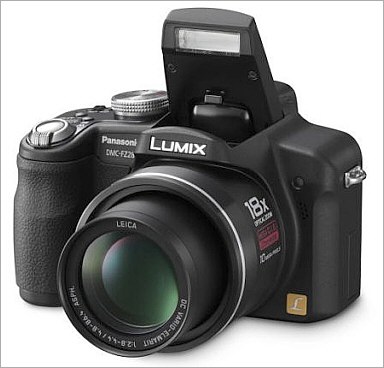
The hardware we used in this production was also easy to use. We used a camera from the Panasonic Lumix range. It was very easy to use and was capable of doing everything we needed. We didn't really learn anything from using this hardware as all of us have filmed before and we have had a lot of experience.

Sony Vegas then enables us to render the footage with their software. We learned that different rendering techniques and formats have different effect on quality and upload-ability.
Once we rendered the footage with an appropriate format, we uploaded it to YouTube so that the video was easily accessible from all computers.  

From there, we each uploaded the footage to our Blogger where our work will be marked.
Discovering how to use Blogger was the first technology that we had to discover on how to use.
We learned how to design our Blog, edit and publish posts and how to upload videos and pictures.

To make our blog look more interesting, we used a programme called Prezi. This software was new to all of us. Prezi allows you to make presentations with custom layouts, pathways and a range of edits and imports. It seemed very complicated at first with all the different techniques and options you could have or use. But after a few attempts, the software became clear. It was very simple to use once you knew how and was very effective.

Evaluation - How Did You Attract/Address Your Audience

During our opening of our production we tried to address our audience so that they would enjoy the film and want to carry on viewing. We tried to appeal to the male and female audiences differently.
The Prezi shows the techniques in which we did this.


Evaluation - Who Would Be The Audience For Your Media Product

The audience for our product isnt the typical audience for Rom-Coms. The genre typically aims at an adult female audience. Our product would still appeal to this audience but will also start to appeal to the male audience as our production focus on males. It would most likely have a wide audience range becuase it will obviously appeal to adults as it features on love but it will also attract a younger audience (older teens) because there is a lot of humour and ridicule (banter) which will make the film enjoyable to watch and younger audience will be willing to watch it.
We showed our production to a group of teens who were at college/6th form to see if our opening interested them.
All of the males say that they enjoyed  the opening and said that they were interested in what happens. All of the females but one said that they liked the idea and were interested as they hadnt seen men represented this way. One of the girls said that the characters didnt interest her as she couldnt relate to them. Our opening seems to attract to a wider range as a majority of the younger audiences enjoyed it as well as adults. We asked to married couples to view our film and they all enjoyed it. The two men both said that they liked and could relate to the characters and the women said that they enjoyed seeing the men in difficulties.

This is a picture of the students we asked (16-17)


Evaluation - What Kind Of Media Institution Might Distribute Your Media Product And Why

If our film was to be distributed, it would be done by an independent company. This is because our film had a very low budget and actors that aren't known. Major companies would only go for films with a large budget and well known actors.


Optimum are an independant disrtibution comapany who distributed "Four Lions" and "Submarine". Both of these films have had great success and where distributed by independant companies.

Tuesday, 20 March 2012

Evaluation - In What Ways Does Your Media Product Use, Develop Or Challenge Forms And Conventions Of Real Media Products

Our media product uses conventions of other media products that in our genre. In the opening of our Rom-Com a variety of conventions are used. Some of these include the different character types. In our film there is a visible contrast in the characters and this is used in real media products in the Rom-Com genre. For example, in our product the different character types that cane be seen are; The reliable one (played by Jonny Cloke), the dominant one (played by Sam Dixon), the stupid one (played by Arron North) and the irresponsible one (played by Jonathan Sollo). This is is used in the film "Four Weddings and a Funeral" as different character types (including some of these) are established in the opening.
Our opening also features aspects of comedy and romance which is compulsory in a Rom-Com.
"You Can Do This" doesn't really challenge other media products of our genre but does have aspects that are very different and aren't used. For example, it features unknown actors rather than well recognised and actors that are associated with the genre. Our production is also set in a small and not well recognised location. Other Rom-Coms use well recognised places such as London or New York whereas our film features in Hastings.
Our Production also develops the conventions and forms of Rom-Coms. This is because the main character is one of the male characters. In most cases in Rom-Coms, it is traditionally the woman who is the main focus point and is seem preparing for a wedding or specific event. However in our film, a male is the centre of attention and therefore is starting to develop the Rom-Com genre.

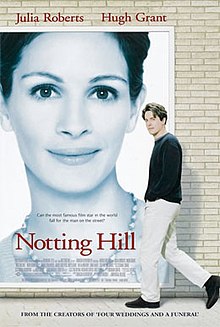
The film poster for "Notting Hill" shows this as the female charatcer is much larger than ther male character and is therefore the centre of attention. 
This a picture of our opening, where you can see that the males are the centre of attention.

Equipment used for filming

During the filming of "You Can Do This" we used basic equipment. The camera we used to record was from the Panasonic Lumix range
The camera belonged to Jonny Cloke. The camera was very good for what we wanted as it was easy to use, took clear images and saved time as the camera belonged to one of the group so we didn't have to borrow a camera or put a deposit on one. We also used a standard Tri-pod that was also provided by Jonny Cloke.

Monday, 19 March 2012

Synopsis of our film

Our film is about a group of four friends preparing for a wedding. One of the men is the groom and the other three are close friends. The film starts with the group of friends getting ready for the wedding rehearsal. We discover that the groom is nervous about the wedding and is wondering whether he can go through with it. The film will then follow the group of friends through the troubles and mishaps that occur leading up to the wedding and the ridiculous attempts from the friends in order to make sure that the wedding goes ahead as planned.
As our film is from a male point of view, it is able to stick to the conventions of Rom-Cons yet stand out at the same time. It differs as it shows the troubles and pitfalls of relationships from the male point of view. This will appeal to both male and female audiences as women will be interested to see how men would deal with certain situations and would appreciate the humour of men making mistakes. It will also appeal to men as they can relate to the characters.

Friday, 16 March 2012

Continuity Errors In Main Task

After looking back at our Preliminary footage and noticing how many continuity errors we had made, we tried our hardest to to improve on our main task. After watching it we can only see two minor mistakes that were due to the fact that we had to film certain shots over a two or three day period and had to try and place objects where they were the day before. An example of this is that when the character that Arron North plays is looking into the mirror, you can see that the brush is on the right side of the mantelpiece. But when the shot changes so that the camera is the mirror and Arron is looking at the camera he picks up the brush from the left side of the mantelpiece. Another mistake is that when the character that Sam Dixon plays walks into the room when Arron's character is singing you can see he moves position from where he was standing in the next shot. This is because that we filmed up to Sam walking in one day and the shot when Sam is in the room another day due to time issues and it was difficult to mark out exactly where Sam was standing.

AS Main Task, Film Opening - Rom-Com

This is our film opening 2 minutes (approx).
It is a Rom-Com.

Difference in Beginnings of Our Film and Researched Film

Our film and Four Weddings and a Funeral use similar openings. They both show different characters getting ready throughout the opening. However, Four Weddings have some very long shots (e.g. 15 seconds, 18 seconds) whereas a majority of the shots in our opening are short and quick cut to increase the pace. They both start with similar stories, Four weddings - wedding and our film opening - wedding rehearsal. We wanted to get the feel of rushing and maybe panic whereas the opening to Four Weddings is at a much slower pace. Both films use titles in a similar way, but we use the actors name when their character is on screen whereas Four Weddings does not. We also use dialogue throughout most of our opening whereas Four Weddings only has dialogue at the end of the opening.

Opening Analysis - Four Weddings and a Funeral

Four Weddings and a Funeral
PolyGram Filmed Entertainment
Channel Four Films
Working Title Production
Mike Newell
         -
Actors names now appear
Hugh Grant
Andie Macdowell            First 30 seconds used for these titles.

Title on screen - Title shot lasts 5 seconds.
Shot 1 - You see a man in bed asleep. His alarm goes off (most likely non-diegetic sound) and he starts to wake. The room is partially visible in background and what can be seen looks fairly messy. The fact that the character is in bed for the first time we see him suggests that he is lazy as we know nothing else of the character. There are titles of an actor at the bottom of the screen. The actors name isn't the actor who plays the character in shot. There is Music playing in the background of this shot that started during the title shots.
The shot was a Long Mid-shot. Shot Length 6 seconds.
Shot 2 - Shot the cuts to close up on the alarm clock and the characters arm reaches over to turn of alarm. The camera then pans across by following the characters arm and we now see the character going back to sleep. This ends up as a Close-up on his face. The fact that he goes back to sleep strengthens the suggestion of laziness/slob. Music continues. Shot lasts 7 seconds.
Shot 3 - Shot then  cuts to another man in bed. His alarm goes off and he abruptly stops it and gets up. Another title appears at the bottom and again it is not the actor who plays the character on screen. Once the man has got up, he gets a blazer out of a box and lays it on his bed. This suggests that there is some occasion occurring (most likely a wedding, suggested by the title). He then walks into the bathroom and stands in the mirror getting ready. This contrasts with the previous character as he stayed in bed and this character immediately got up. This again, adds to the suggestion that the first character is the lazy one. Shot lasts 18 seconds. Long Mid-shot. Pans to follow man walking to bathroom.
Shot 4 - Cuts to a woman walking into a room with a large mirror. She then stands in front of the mirror comparing dresses. This re-enforces the suggestion of an event as multiple people have been shown getting ready. Actor name appears at bottom of screen, and again not the actor who plays character on screen. shot lasts 8 seconds. Long Mid-shot.
Shot 5 - Shot cuts/immediate zoom to Close-up/semi over the shoulder shot. Closer to mirror, you can see the womans face in the reflection of the mirror rather than her actual face. Titles appear at bottom of shot. Not actor on screen. The fact that its closer to the mirror allows us to see the womans face clearer and therefore her facial expressions which creates a feel of intimacy as we are able to understand how she is feeling via her facial expressions. This intimacy sticks to the conventions of Rom-Coms. Shot lasts 7 seconds. Close Mid-shot.
Shot 6 - Cuts to a close up of a full English in a frying pan. This establishes the time. Even though the people were seen getting up, the breakfast being cooked just enforces the time of day. Not Credit, titles. Shot lasts 4 seconds.
Shot 7- Cuts to mid shot looking into mirror. Reflection shows another character previously unseen getting ready. The camera then zooms towards mirror and then begins to pan around to show actual people rather than reflections. During the pan, you see another character entering the room. As the pan starts to come to an end the character is walking past the camera to establish he has entered the room. The second man is bringing in the breakfast from the previous shot. When the camera pans round completely to show the two men standing together you can see that the second man has shaving foam on his face. The first man the proceeds to wipe it off. This suggests that there is a close and personal relationship due to the friendliness of the action. As there is a noticeable age difference it suggests that it is most likely father and son. The close bond also adds to the convention of personal relationships and intimacy of Rom-Coms. There are two titles in this shot, one of them is the actor who plays the character on shot. As this is the actors first major film it is understandable for his name to appear with his character whereas the other actors are more well known and therefore can appear somewhere else. Shot last 15 seconds. Shot goes from Long Mid-shot to Mid-shot.
Shot 8 - Shot cuts to a close up of the first character still in bed. This shows that whilst everyone else is getting ready he is still sleeping, therefore repeating the suggestion of laziness/disorganised. Shot lasts 5 seconds. Close-up.
Shot 9 - Starts with woman who was previously seen looking in mirror walking down the stair in chosen dress. She then walks past camera and it pans to follow her. She enters dining room and the second man is seen having breakfast. She stands in front of table so that she is visible to the camera and a woman (seen for first time) hands her a drink. It isn't clear whether she is a maid or not but it throws out the suggestion of possible wealth. She hands drink back after drinking and proceeds to leave the room. the man at the table quickly gets up and follows her out the room. There is also dialogue for the first time in this shot where the woman/maid? hands the first woman the drink (Maid?- Good Morning... Woman - Thank you). Two titles/credits appear on the shot and neither of the actors are in the shot. The shot starts with a Long-Mid shot and then pans to follow woman. Shot lasts 18 seconds. Long Mid-Shot.
Music is playing throughout the whole opening.

Decision on Titles/Credits For Opening

We decided to take ideas from all the films that we watched for research and use aspects from each in our opening.
We liked the idea of having the actors names coming up when their character is on screen like in Notting Hill but we wanted to have all the actor names come on screen like in Four Weddings and a Funeral. So we combined the two and we have the actors name coming up when their character appears for the first time in the opening. We will use a simple font as our characters are just normal people. We also decided on not using capitals for the names to connote that this group of friends our very close and personal and the lack of capitals shows that it is very informal. This is a very rare technique used and we hope it has the right effect. As an formal theme should be suggested by our opening with the wedding and formal clothing, the informal use of crediting suggests that maybe these characters aren't comfortable with the situation and perhaps don't feel as if they fit in. The contrast between the formality of the situation and the informality of the credits could have a good effect.
Unlike the films we watched for research, we don't want to put the title at the beginning (Four Weddings and a Funeral) and we don't want the title during the opening (Notting Hill, Love Actually) so we decided to put the title at the end of the two minute opening.

Titling and Credits Ideas/Research

Before we added the titles and credits to our film we decided to watch some other Rom-Coms to get ideas on how we could put the titles in our opening. The Films we watched were:
  • Notting Hill
  • Love Actually
  • Four Weddings and a Funeral
All of these films all include credits and titles in their openings and they have a range of similarities and differences in the way they show them.
Each of these films show the Production Companies before the opening shot which is the normality in films and this is what we had decided on doing beforehand anyway.
In Notting Hill, the name of the Actress comes on at the bottom of the screen when there is a close up of her. This allows the name and face to put together. For this film, a fancy font was used as the character is famous so for our film, we would use a simple font. In the opening of Notting Hill, there is only one actress credit and a credit on someone who worked on the film. For our opening we would want all the actors credited rather than just one. 
Four Weddings and a Funeral credits a majority of the actors and all of the main characters actors. We will do this in our film as it establishes who is in the film. Unlike Notting Hill, the actors come on screen when the character isn't on screen for a couple of times. We wouldn't do this as we would rather have the actors name up when the character that they play is on screen. 
Love actually doesn't feature an of the actors names in the opening sequence but does feature the title of the film part way through the opening. This is similar to Notting Hill where the title of the film comes up during the opening sequence whereas in Four Weddings and a Funeral, the title comes up at the beginning of the film. 

Production Company For Our Film

The company that would produce our film would most likely be a independent production company. This is because our film had a very low budget and features actors that aren't known. Major Production Companies are most likely to produce films that feature major stars and have had big investment.

Conventions of our Rom-Com

During the opening of our Rom-Com we use a range of the conventions that other films in genre use in order to make our film as true to the genre as possible. The main convention that we stick to is introducing the characters at the beginning of the film so that our audience is able to get to know the characters as soon as possible so that it is easier for them to relate to the characters throughout the film.
We also made our opening as fast paced as possible in order to keep the audiences attention and not allow them to get bored. The fast pace also suggests that the characters lifestyles are very frantic and busy. This makes the film seem interesting and will engage the audience from the start.
Another convention we use is a range of Close-up shots. As the genre of Rom-Com is a very intimate one as it features around love and personal feeling, it is necessary for the audience to feel as if the are able to be close with the charatcers. Close-up and other shots that focus on the chracters (such as Mid-shots featuring two characters faces) will do this as it makes the opening feel very personal due to the fact that you are close up to the charatcers. It also gives the impression that the characters are allowing the audience to get to know them with the close and personal shots as they are the main focus.
All of these conventions are used heavily in the genre to great success. We hope that using these conventions in our opening will strengthen the feel of a romantic-comedy and engage the audience.

Thursday, 15 March 2012

Opening Two Minutes Of Rom-Com Analysis - Love Actually

Love Actually-
Universal Studios
Studio Canal
Working Title                 First 48 seconds used to credit companies.

Shots used
Mid-shot (pans across to the left)
Long Mid-shot (zooms in, pans across and finds focus)
Long Close-up
Mid-shot (zooms in)
Close-up (pans to follow person on screen)
Over the shoulder
Close Mid-shot
Long Close-up
Mid-shot
Long Mid-shot (main focus is at back of screen)
Mid-shot
Over the shoulder (pans to follow)
Over The shoulder/Mid-shot

All the shots are short which follows the convention of fast paced openings to Rom-Coms. It also suggests that there is a lot going on at the beginning of the film, this should engage the audience as they will be drawn in in order to see what's going on. The location for the opening is at the arrivals section of an airport and the area is very busy. This adds to the feel of busyness and also makes the opening flow faster with the quick cuts. There are no fades in the opening in order to make the cuts seem quicker and more precise. Unlike other Rom-Coms there is no real intimacy in the opening towards the characters that feature in the film. There is however, intimacy featured in general throughout the opening of the film as it shows people meeting at the airport and being glad to see each-other. Rather than introducing the characters in the opening there is a voice over narration. This makes the opening feel story like and therefore engages the audience as they are being spoken to directly. The main conventions of Rom-Coms are present but used in a different way to a majority of Rom-Coms. This is effective as it gives a fresh feel to the genre. 

Opening Two Minutes Of Rom-Com Analysis - Notting Hill

Notting Hill -
Universal Studios
PolyGram Filmed Entertainment
Working Title Films

The first 35 seconds of the film are used to put the credits of the companies who are part of this film on. They are placed on a black background with a simple font.

Shot 1- Fades to close up of Woman (Julia Roberts) face, pans out slightly to reveal who face and top of shoulders. The immediate close up makes the film very intimate from the very beginning. This follows the conventions of rom-Coms as they are a close, personal intimate genre. Shot lasts 6 seconds (35-41)
Shot 2- Fades to same woman turning to look at audience with camera flashes on her face. This suggests to the audience that the woman is famous/highly admired even before we actually know who the character is. During these two shots there has been background noise such as cheering and clapping, this to, adds to the suggestion of fame. This shot last 3 seconds (41-44) Close Mid-shot.
Shot 3 - As the shot is fading, the first name credit appears on screen (Roger Michell Film). The shot pan/fades across screen from right to left, slowly revealing the womans face. It only reveals half her face. This could suggest that maybe she has something to hide as all is not revealed. It could also suggest that she is not all what she seems. Shot lasts 3 seconds (44-47) Close up.
Shot 4 - With Credit still at bottom of shot, the character who has been focused on is in the middle of the shot with people placed on either side of her. This makes her seem important as she is in the centre as if she is the centre of attention. This shot only lasts a second and starts to pan/fade to the left (47-48) Mid-shot.
Shot 5 - As previous shot was pan-fading to next shot, titles leave screen. The next shot is a Mid-shot of the woman looking around having photos of her taken. The shot then closes in on her and becomes a close up on her face. This suggests that she likes the attention she gets as she allows you to get close to her. This shot of her face then  becomes a magazine front cover via an edit. This then re-enforces the suggestion of fame as now it it has been clarified. This shot lasts 6 seconds (48-54). Mid-shot to Close up.
Shot 6 - It then goes back the woman walking having her photo take. It is a close up on her face. She is wearing sunglasses which could relate to the suggestion that she isn't all that she seems as part of her face is covered. This shot lasts 4 seconds (54-58). Close up.
Shot 7 - Cuts to another mid shot of her having photos taken. Shot lasts 3 seconds (58-1.01). Mid-shot.
Shot 8 - Shot then fades to woman wearing headphones with a non-distinctive background. This could suggest that maybe she has something to do with the music industry as the background could well be a studio. She takes the headphones off and starts to get her hair done by someone of shot. Fades into next shot. Shot lasts 3 seconds (1.01-1.03). Mid-shot.
Shot 9 - Close up of woman after having her hair and make up on. During this shot, the actresses name comes onto the screen (Julia Roberts) in a flamboyant font, with different colour lettering for the first letter of her first and last name. The shot doesn't move and neither does the woman. This gives us time to see her in real detail and creates a very intimate moment for the audience. Shot lasts 4 seconds (1.03-1.07). Close-up.
Shot 10 - Fades to another close up on her face with camera flashes shown on her face. The camera pans in slowly and then her face becomes another magazine front cover. This adds to the representation of fame as it shows that the character is on multiple front covers. Shot then begins to fade. Shot lasts 7 seconds (1.07-1.14). Close-up.
Shot 11- Fades back to a close up on her face. Shot lasts 1 second (1.14-1.15) Close-up.
Shot 12 - Fades to mid shot of  woman walking down something similar to the red carpet with a crowd behind her. Shot lasts 3 seconds (1.15-1.18) Mid-shot.
Shot 13 - Fades to woman walking, close-up as we can only see her head and she stops to meet someone. At the end of this shot the title of the film appears as the shot begins to fade. Shot lasts 6 seconds (1.18-1.24). Close-up.
For the rest of the opening two minutes the shots rapidly change from Mid-shots and Close-ups of the woman. The shots have a very short length with lengths of 3s,5s, 4s, 4s, 6s, 5s, 4s and 5s.
During these shots you see the woman on a film set, her approached by fans and a shot of a directors chair. This introduction focuses completely on the woman and its main objective is to introduce her to the audience. This sticks to Rom-Com conventions as knowing the characters are essential so that the audience are able to relate, sympathise and feel attached to the characters which is essential in Rom-Coms due to the intimate nature of the genre.
The quick cuts, fades and pans also suggest that the character lives a fast lifestyle and that the fact that she is shown to be on the front of magazine covers suggests that she is also in the public eye a lot of the time. This is another reason there is a lot of use of Close-ups as its allowing the audience to feel part of that public.
The fast paced nature is another Rom-Com convention that is also used with the quick cuts. The use of the past pace helps the opening to flow smoother and keep the audiences attention.

Production Company Research

  • Universal Pictures - Production Company for 3438 films. Founded by Carl Laemmle a German-Jewish immigrant from Laupheim who settled in Oshkosh.
  • Studio Canal - a.ka. Le Studio Canal+, Canal Plus. Was founded in 1988 by Pierre Lescure as a spin-off of the Canal+ pay network. Production Company for 281 films.
  • Twentieth Century Fox Film Corporation -Production Company for 1493 films. It was formed in 1915 by the theatre chain pioneer William Fox who formed the fox film corporation by merging two companies he had established in 1913, Greater New York and Fox.
  • Working Title Films - Production Company for 163 films. Company is based in London UK and was founded by Tim Bevan and Sarah Radclyffe in 1983.
  • Columbia Pictures - Production Company for 2907 films. Founded in 1919 by Harry Cohn, his brother Jack Cohn, and Joe Brandt.

Production Company Information

We decided on calling our Production Company "Two Jonny's Productions" because not only are we both called Jonny (who made the film) the name is also a play on words of the famous double act; "The Two Ronnies". For our logo we wanted something that was related to films so we decided on a camera on the front of a film clapboard.

Logo for our own Production Company

Storyboard - Part 2

Storyboard - Part 1

Storyboard - shot by shot

Shot 1 - The first shot is an establishing shot looking over at the sky and the top of the town in which the film is set. The town looks fairly regular where it seems that nothing particularly interesting happens. The towns apperaence is matched by the grey sky and gives an overal impression of bleakness. The shot then pans down to focus on the town. This suggests that were the focus of the town is where the action is going to take place. (Establishing shot)
Shot 2 - The second shot is of one of the characters (Sam) getting ready in the mirror. The fact that he is looking in the mirror suggests to the audience that he is possibly vain and cares about his appearance. The audience gets this impression before they have even got to know the character properly. The Shot is at a low angle which suggests that the character is strong and dominant. (Mid-Shot)
Shot 3 - The third shot is a close-up on some keys. The keys are then picked up by a hand of one of the main characters. The shot is short and quick cut which suggests that the character is in a hurry and adds to the fasted pace nature of our opening. (Close-up)
Shot 4 - The fourth shot is of one of the characters leaving his house and getting in his car. The shot starts by looking at the house and then pans to follow the character as he walks to his car. (Long-shot)
Shot 5 - The fifth shot is of the character sitting in his car and waiting before making a phone-call. The camera is positioned on the dashboard of the car so that the audience are able to see into the car. (Mid-shot)
Shot 6 - The sixth shot is of another character laying in bed asleep. As the previous characters are up and ready, this suggests that this character is lazy and not as organised as the others. (Mid-shot)
Shot 7 - The seventh shot shows the same charatcer from the previous shot getting ready in a hurry, the camera position is slightly further back to allow movement and still be in frame. (Long Mid-shot)
Shot 8 - The character is seen running down the stairs and the camera pans to follow him out the door. (Long Mid-shot)
Shot 9 - The character is now seen running towards a car. The camera is located from inside the car looking out the window. (Long POV-shot)
Shot 10 - The character enters the car. The camera is again located on the dashboard looking at the two characters sitting in the front two seats. There is an exchange of dialogue. (Mid-shot)
Shot 11 - We see the main character getting ready in the mirror. (Mid-shot)
Shot 12 - Close up of main character looking at the mirror. The camera is positioned as if it were the camera and this creates a personal affect as we are introduced to the main charcter. He is shown by his actions and dialogue to be nervous about his wedding. (Close-Up)
Shot 13: He begins singing in the mirror. This reflects the comedy aspect of our film. (Close-Up)
Shot 14: The first character walks in on him and looks at him in amusement. (Mid-Shot)
Shot 15: The other 2 characters walk in late and do the same.(Mid-Shot)
Shot 16: The main character acts confused as to why they are amused. (Mid-Shot)
Shot 17: The camera pans down to show he is naked from the waist down except for boxers. (Mid-Shot)
Shot 18: Fades to black.

Wednesday, 14 March 2012

Main Film Locations

Unlike our Preliminary footage, we didnt have time to go and film on location, so all of the film was shot in one place. We needed a house as the opening shows characters getting reading so a bathroom, bedroom was compulsory. Although we needed 3 different character houses, we were only able to film at one house (Jonny Clokes). At first we thought this would be a problem but we decided that we would film in the house with different angles and things moved around slightly to make it look like different houses. We think we were successful as when people watched our film they weren't able to tell that it was filmed in one house. There was one shot outside the house on the drive-way but no shots out on location.

Production company's of other Rom-Coms

  • 4 Weddings And A Funeral - Polygram Filmed Entertainment, Channel Four Films, Working Title Films
  • Bridget Jones's Diary - Miramax Films, Universal Pictures, Studio canal, Working Title Films, Little Bird
  • When Harry Met Sally - Castle Rock Entertainment, Nelson Entertainment
  • Pretty Woman - Touchstone Pictures, Silver Screen Partners IV
  • Theres Something About Mary - Twentieth Century Fox Film Corporation
  • Maid In Manhattan - Revolution Studios, Red Om Films, Hughes Entertainment, Shoelace Productions
  • 50 First Dates - Columbia Pictures Corporation, Happy Madison Productions, Anonymous Content, Flower Films (II)
  • The Break-Up - Universal Pictures, Mosiac Media Group, Wild West Picture Show Productions
  • Love Actually - Universal Pictures, Studio Canal, Working Title Films, DNA Films
  • The Holiday - Columbia Pictures, Universal Pictures, Relativity Media, Waverly Films

Tuesday, 13 March 2012

Sound Techniques

There are different types of sound within filming and editing. Some examples are;

  • Diegetic Sound - a sound that comes from a person or object that is in the field of vision in the diegesis (the world of the story).
  • Non-Diegetic Sound - sound that comes from something that is not in the field of vision and has been added in afterwards in the edit.
  • Sound Motif - a sound that is associated to a character or place.
  • Ambient Sound - background sound belonging to the diegesis but not always in the field of vision.
  • Sound-scape - the whole set of sounds used. Like the mise-en-scene for sound.
  • Synchronous Sound - where the sound is synchronised with the object emitting the sound or the person who is talking in shot.
  • Asynchronous Sound - where the soundtrack is deliberately out of sync with what is visible in the filed of vision (this effect is not commonly used).
  • Sound Bridge - where the sound (diegetic or non-diegetic) continues across one or more cuts/transitions. 
  • Sound Effects - sounds added to the visuals in editing. 
Our film opening uses a majority of these techniques. There is a large amount of diegetic sound with dialogue and general noise such as footsteps. There is non-diegetic sound as we added in the music track during the edit. A sound bridge is used as our music in the opening continues through a number of shots. All of the sound is synchronous as all sound that is heard was filmed with the actual shot and none has been added in. An example of this is the engine of the car starting up. There is also ambient sound used, for example, other cars on the road that cannot be seen and seagulls in during the establishing shot and the first few shots around the old town.
The use of the sound bridge helps our footage flow better and makes it more fast paced. This helps it fit to the conventions of rom-com's as films such as "4 weddings and a funeral" have very fast paced openings.

Preliminary footage - locations

For our preliminary footage we used a few different locations. The first 2 shots were filmed in the old town, Hastings. We decided to film on location to add a professional feel to our footage. We decided that even with simple edits, filming on location would make our film look much better than just filming in one area trying to make it look like different areas. After that, the rest of the shots are filmed in "Cafe Club" in town. We liked the idea of filming in a public place to add a feel of realism. With most rom-com's, a realistic and maybe recognisable setting is used so that the audience can relate and maybe feel involved to what's going on.

Mise-en-Scene: Costumes

We used simple clothing in the opening to our main film. They were our own clothes because we didnt have a large budget. Even though our characters are nothing like ourselves we used our own clothes to keep a sense of realism as our characters are just normal people who live a normal lifestyle and therefore dress simply. In the opening, 3 of our characters are wearing suit tops (blazer, shirt, tie) and one of the characters is just wearing casual clothes. The suits suggest a higher class for our characters and the casual shirt which is purple does the same as purple connotes royalty. This suggestion of middle class is reversed by the personality of the characters we have made them fairly common. We have done this to try and differ from the normal stereotypes.

Thursday, 8 March 2012

Continuity Errors in Preliminary footage

There are a few continuity errors in our preliminary footage that we were unable to correct due to lack of time. One of the mistakes is that the time of day changes dramticaly during two consecutive shots. This is due to the times we were allowed to film in. As we filmed in a Cafe, we were only able to film when we wouldnt disturb their business. This is why there is a huge time difference inbetween shots. There are also mistakes of people being in different places in consecutive shots. For example, when Natasha (the waitress) comes over to take the orders, when the shot changes she is alreay back behind the bar rather than just walking back to the bar.
Also, there is another mistake where Rachel (the woman sitting at the table) is in shot, the camera angle changes ans her chair is visible but she isnt there. When the shot changes again, she is back.

Wednesday, 7 March 2012

Preliminary Footage


This is our Preliminary footage. It was filmed in one day in October 2011. There are a few mistakes that we would have corrected if we had the time to do so. We were pushed for time as we could only film in the Cafe after everyone had left so that we didnt disrupt the cafe's business. This is the reason for the change in lighting as it was mid-day when we started filming (in the first shots) and early evening when we finished.
We aimed to use a variety of shots in order to make it look as professional and entertaining as possible. During the edit, we only used basic techniques as we didnt have a great deal of time. We used simple cuts and trimmed shots in order to keep it short and remove irrelevant parts of the shots.
In the Preliminary footage are; Jonny Sollo, Jonny Cloke, Natasha Kingscote, Rachel Howe.

Thursday, 1 March 2012

Film Classification

After looking at boundaries for film classification I would decide that our film would be rated as a '15'. This states that no one younger than 15 may see a '15' film in a cinema, they will also not be able to buy or rent a '15' rated work.
My reasons for deciding our film would be rated as a '15' is that it states a 15 rated piece of work must not endorse discriminatory language behaviour which our film does not. It also states that it may show drugs but not show them in use and my not promote drug use. Our film may have references to drugs, but at no point would feature them.
Language is another feature in our film that would make it a '15' rated as there is occasional use of strong language.
Sexual references would be in our film as it is a Rom-Com so occasional uses would be acceptable as it is relative to the genre of the film. Nudity may be featured but is unlikely but if so, it would be brief and without strong detail which is acceptable.
Other restrictions that can determine a films rating that would not directly apply to our film are:

  • Horror
  • Imitable behaviour
  • Violence

Editing Software

To edit our material we used 'Sony Vegas movie studio HD platinum 11.0'.
When we first started using the software we had a few issues. We had difficulty cutting shots and trimming them where we wanted. After some time spent and some trial and error we figured out how to effectivley and easily cut shots down and trim specific moments. Our original footage lasted over three minutes but we were able to cut it down to just over two minutes. We did this to make our opening more fast paced and to the point. This is similar to other Rom-Com openings as they tend to be past paced with quick cuts. After we had finished editing our material we had a problem with it playing all the shots edited together. The shots would however play without them being part of the edited version. There was no sound however on these single shots. We then rendered the film and after that it played as one edited video and allowed the sound to play. We still need to edit the soundtrack we have added (These love songs dont make sense - The Vindickers) so that it can be as effective as possible but doesnt interupt the dialogue form the shots. We also need to add titles and for that we will use a website called 'dafont.com'. This website allows us to download interesting and different font styles to provide us with a wide range to pick from.